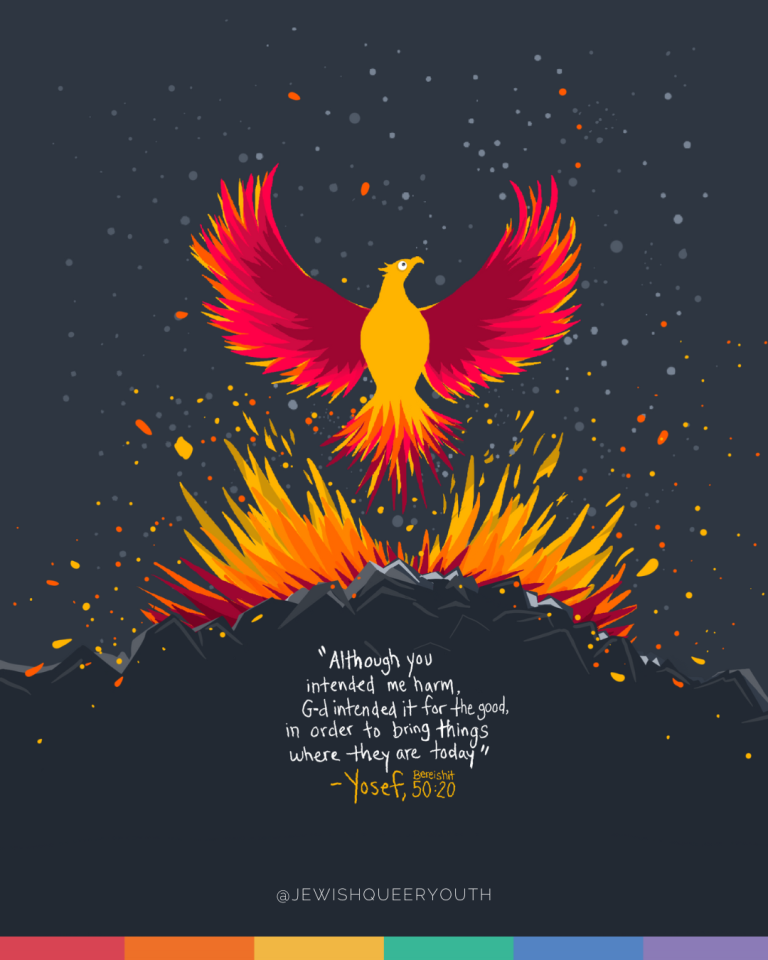
This week’s parsha, Vayechi, includes Yosef’s reaction to his brothers’ apology: “Although you intended me harm, G-d intended it for the good, in order to bring things to where they are today and save lives.” (Bereishis 50:20).
Yosef’s words hold the complexity of harm and healing. They don’t erase what happened. They don’t excuse it or rush past it. Instead, they remind us that harm does not get the final word – and that meaning, growth, and life can still emerge after devastation.
The phoenix – a mythical bird that burns to ashes and rises renewed – echoes this idea. Often embraced as a queer symbol, the phoenix represents transformation, resilience, and rebirth. Its cycle reminds us that healing isn’t linear, and strength doesn’t come from pretending nothing burned – it comes from surviving the fire.
At JQY, we hold this tension carefully. We never ask anyone to justify their pain or “find the silver lining” before they’re ready. But we do believe in the capacity to rebuild, to reclaim power, and to imagine futures bigger than what tried to break us.
For anyone carrying the weight of hurt right now, Yosef’s story and the phoenix offer this quiet truth: what others intended to harm you does not define your worth – or your ability to rise, in your own time, and on your own terms.