In Parshat Vayakhel-Pikudei, the Mishkan (Tabernacle) is completed. Among the materials used is something unusual: “tachash” skins. The Torah doesn’t tell us exactly what a tachash is…and of course, the rabbis debate it.
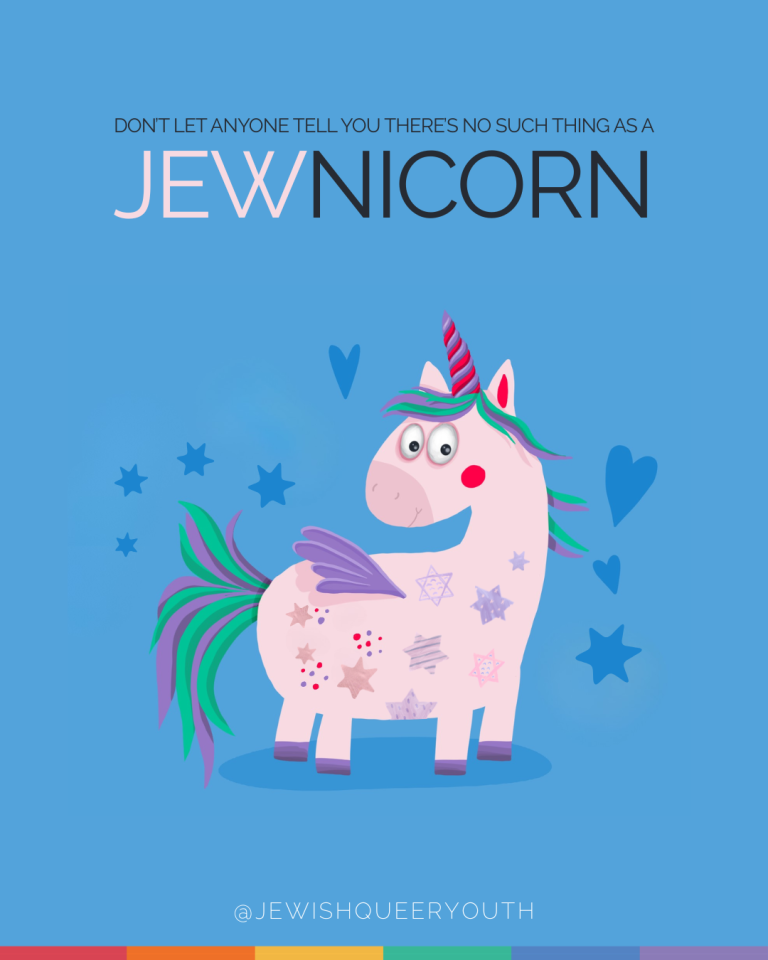
Midrash Tanchuma relates the discussion between Rabbi Yehudah and Rabbi Nechemiah, in which R. Yehudah stated that ‘tacḥash’ was a huge kosher (ritually pure) animal in the desert, with one horn in its forehead, and a hide of six colors, from which the Israelites under Moses made the curtains of the Mishkan (Tabernacle). “They captured one of them and from its skin made a covering for the ark.” R’ Nechemiah responded that tacḥash was a miraculous beast that was hidden away after it was used in the Mishkan. He proposed that it was necessary to create such a beast because it is written that the curtains of the Mishkan were 30 cubits long, and he asked, “What animal hides are 30 cubits long?” He concluded that the ‘tacḥash’ was a momentary miracle that was hidden away soon after it happened. Rabbi Abun said, “It was called a unicorn.”
A multicolored, one-horned, possibly one-time-only creature created for sacred purpose?
It’s mysterious, but here’s what we do know: the tachash formed the outermost covering of the Mishkan. It protected what was holy. Its beauty wasn’t just ornamental – it was structural. Sacred space was wrapped in something rare, vibrant, and unlike anything else.
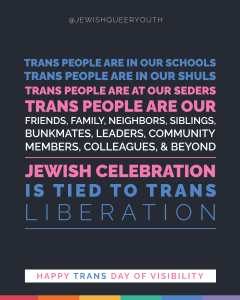
Queer Jews have often been treated like anomalies – too colorful, too different, too much. And yet, the Mishkan itself was wrapped in something singular and extraordinary. Not hidden. Not diminished. ESSENTIAL.
Queer Jewish youth are not side notes to Jewish life. They are part of what makes our community resilient, creative, and strong. Their uniqueness is not an obstacle, but part of the architecture itself. Sometimes the thing that looks unusual is exactly what holds the sacred together.
Good shabbos to all you beautiful Jew-nicorns 🦄✨